Team building doesn’t have to be sporty. When a team brings together people with very different fitness levels, age groups or physical abilities, a purely sports-based event can create unnecessary pressure. Good team-building activities don’t require everyone to run at the same pace, stand for the same length of time or have the same level of fitness.
The better question is: what task gives everyone the chance to make a genuine contribution to the shared outcome? That’s where good team building without sport begins.
Why less sport can sometimes mean more teamwork
Sporting events can be fantastic when that’s what the group wants. But they’re not automatically the best choice for every company. Many teams bring together people with completely different interests and physical abilities. Some look forward to getting active, while others would rather work creatively, strategically or collaboratively.
If the shared experience is the main focus, an activity without a sporting emphasis is often the simpler and more inclusive option. No one has to prove themselves. No one automatically becomes a spectator just because others are physically stronger.
What to look for when choosing an activity
- Everyone needs a meaningful role.
A good event offers different tasks, rather than just one way to take part. - Success shouldn’t depend on speed.
Strategy, communication and creativity create more opportunities for everyone to get involved. - The venue needs to be suitable.
Seating, short distances and enough space help accommodate mixed groups. - Tasks should be easy to allocate flexibly.
Anyone who doesn’t want to build can plan. Anyone who doesn’t want to present can organise. - The shared outcome is what matters.
This creates a sense of team spirit without putting individual participants under physical pressure.
Our ideas for team building without sport
1. Team bridge-building
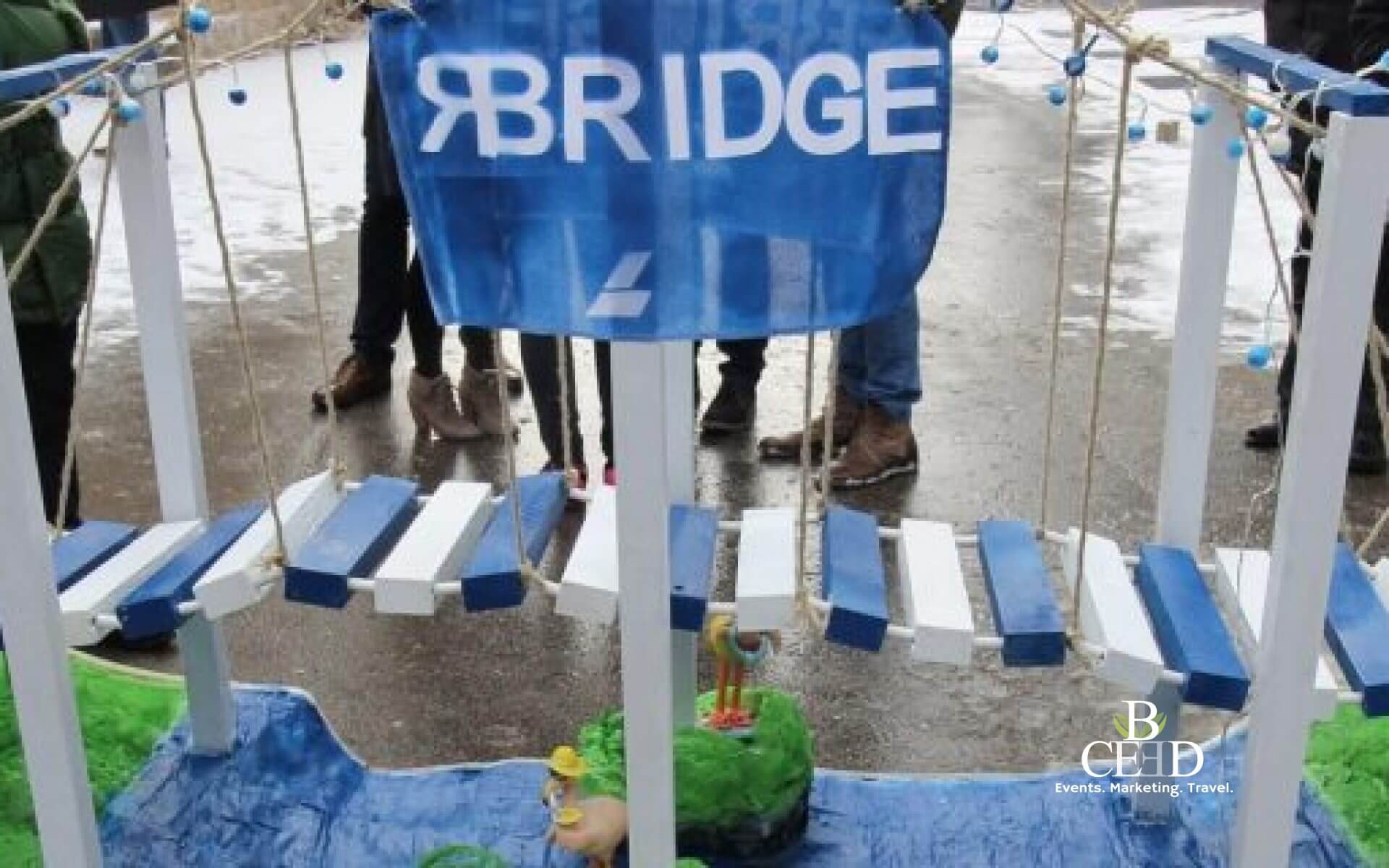
Bridge-building is all about planning, communication and constructing something together. The team works on a task that only succeeds when information is shared and decisions are coordinated.
This activity is particularly well suited to mixed groups because it offers scope for different roles. Some participants focus more on construction, while others take care of planning, materials, communication or the presentation. You’ll find more examples of creative and strategic activities in our article about team-building activities
.
2. Making films
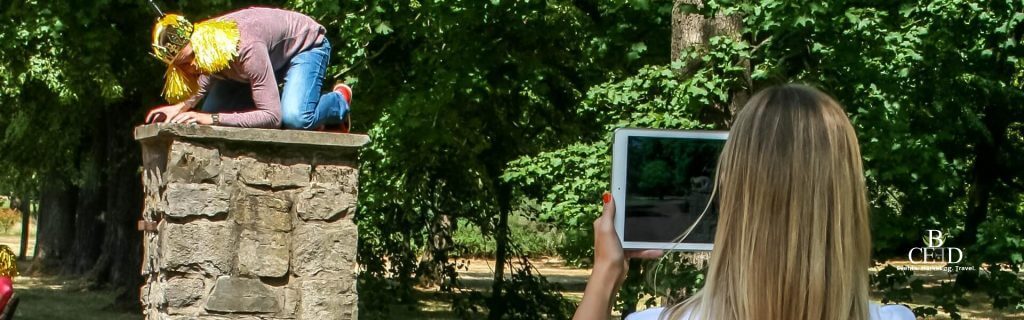
Making a film is almost the opposite of a traditional sporting event. The team comes up with ideas, assigns roles, plans scenes and then brings them to life. Not everyone has to appear in front of the camera. Directing, organising, writing the story, set design and filming offer plenty of roles for different personalities.
The biggest advantage lies in the collaboration. The result only comes together when the different roles complement one another. That’s exactly why a film project is much more than just entertainment as a team-building activity.
3. Graffiti workshop
In the graffiti workshop, the team first comes up with a shared design or idea. Then they turn it into something tangible. Creative participants can contribute design ideas, organised thinkers can help with set-up and dividing up tasks, while others focus on putting the idea into practice.
Here, too, the value comes not from physical effort, but from coordination and making decisions together. The finished artwork can also remain at the company as a memento.
4. Mobile escape room event
An escape room event challenges logical thinking, communication and attention to detail. Clues have to be found, information brought together and tasks solved as a team. Different roles emerge naturally: some people spot details, others keep track of the bigger picture or connect individual clues.
This activity is well suited to groups looking for excitement but not a sporting programme. The only thing to bear in mind is choosing a space and format that allow all participants to get involved in the tasks.
5. Improvisational theatre
Improvisational theatre is about communication, listening and responding spontaneously. It can be an engaging option for teams looking to step outside their usual working routine. No one has to be a born actor. Good exercises build up gradually and can be adapted to the group.
Which activity suits which team?
| Activity | Focus | Particularly suitable for |
|---|---|---|
| Bridge-building | Strategy, planning, communication | Teams that enjoy solving problems together in a structured way |
| Film-making | Creativity, allocating roles | Groups with a wide range of different strengths |
| Graffiti workshop | Creativity, shared outcome | Teams that want to create something tangible |
| Escape room event | Puzzles, communication, strategy | Groups that enjoy excitement and working on tasks together |
| Improvisational theatre | Communication, spontaneity | Teams that want to try out new perspectives |
Small teams don’t automatically need sporting games either
In small groups, every role is more noticeable. That makes it particularly worthwhile to choose tasks that ensure no one is left out. In our article about team-building games for small groups
you’ll find several activities that can also be approached creatively or strategically.
What matters isn’t that all participants do the same thing. What matters is that everyone can contribute to the outcome. This can make one thing particularly clear within a team: different strengths aren’t an obstacle when the activity brings them together effectively.
How to word the invitation
The invitation alone can shape how an event is perceived. If you know that the team has a wide range of needs and abilities, describe the nature of the team-building activity clearly. Words such as creative, strategic or collaborative give people a clearer idea than a vague ‘surprise team event’.
If needed, you can also ask in advance whether there are any practical requirements to consider when choosing the venue, seating or schedule. This makes it possible to resolve many issues before the event day.
Team building without sport isn’t watered-down team building
A good team doesn’t develop simply by getting everyone through an obstacle course as quickly as possible. Communication, trust, role allocation and solving problems together can all be experienced without a sporting focus.
Bridge-building, a film project, a graffiti workshop, an escape event or improvisational theatre show just how varied team-building can be. So, when planning an event for a mixed team, fitness shouldn’t be the first thing you consider. What matters is choosing a shared experience that suits the people taking part and the day’s objectives.
We can put together the right format based on group size, venue, timeframe and the focus you have in mind. The result is a team-building event where participants don’t need to have the same abilities, but can make good use of their different strengths.