
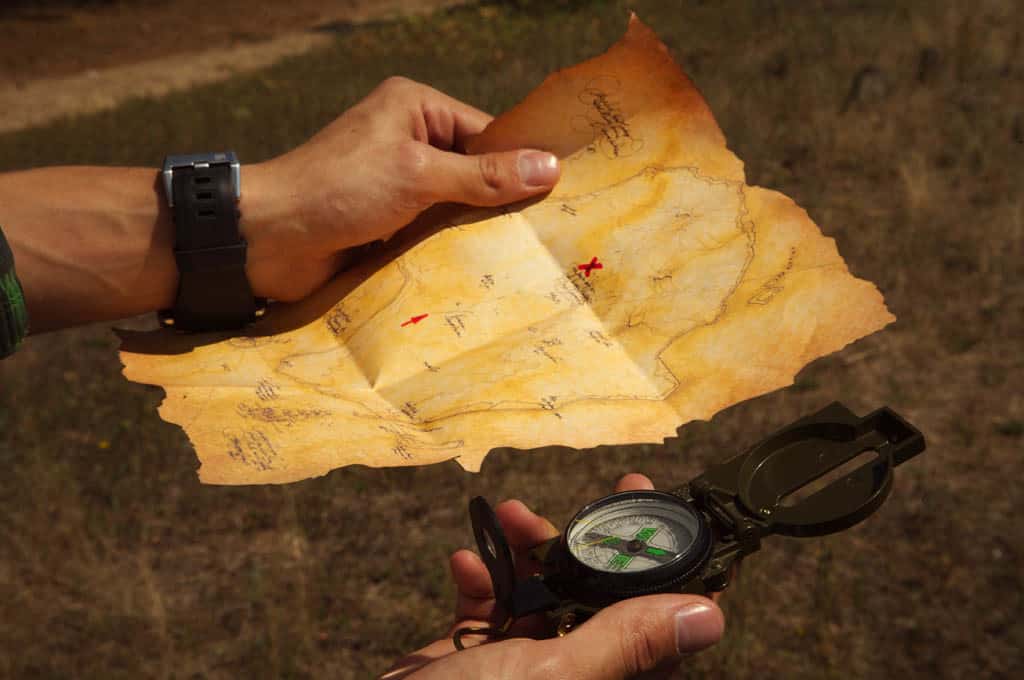
Outdoor treasure hunt fun with an app or almost entirely offline
We all know them from childhood: scavenger hunts. No birthday party was complete without a treasure hunt, especially when the party was in summer. Outdoor fun is now also a great way for adults to get outside and leave everyday life behind. For example, the company outing for businesses
with a treasure hunt
becomes an exciting team day in nature. Today, we’ll show you two types of treasure hunt events that are guaranteed to bring you closer together.
Planning a treasure hunt for adults
understand the basics and differences from a children’s birthday party
understand
Every treasure hunt starts at a starting point and has a destination. Depending on how large an area you want, you can plan a treasure hunt for adults
with a route covering several kilometres. The main differences from a treasure hunt for children are the walking distance, the elevation gain and the technical equipment. While we tend to use printed maps and signposts for children’s birthday parties, on routes for adults
we like to use our GPS devices or tablet PCs. These make the treasure hunt
even more interactive and exciting. Multimedia support would be too distracting for children, however, which is why we almost always plan analogue treasure hunts for kids.
Plan the route length
The longer the teams spend together, the more time they spend communicating with one another. Planning a treasure hunt is very straightforward: you choose a treasure—the reward that the winning team will receive at the end. If you can, put the treasure in a chest. It may sound a little crazy, but you essentially have to start planning your treasure hunt
at the destination. Bury or hide the treasure so that it cannot be found easily. This is also important if it is a public area. Because other people may not know that you are planning an event there.
Exciting challenges on the way to the treasure
Every treasure hunt includes challenges, just like a scavenger hunt. Teams have to complete these challenges on their way to the destination. Make sure that the challenges will engage all participants. If possible, make use of the talents of individual team members and put the groups together so that hands-on participants are paired with the typical thinkers. Such company outings
create a wonderful blend of talent and ambition. Hands-on people like to try things out, while thinkers want to take in the situation first. There are various personality types who have to work together here.
Plan in breaks
Every good scavenger hunt or treasure hunt should include a break around halfway along the route. This motivates participants and keeps their energy up. Small snacks and drinks should be included in the plan. Why not use a break like this for a photo stop? The break location should be somewhere a little quieter, ideally with a beautiful view of the surroundings or the city. A treasure hunt
is therefore also a kind of hike.
Event tip:
why not combine a wine hike
with a treasure hunt in which you have to find the golden wine cork. As a surprise, all participants are treated to a meal at a vineyard at the end of the scavenger hunt.
Analogue scavenger hunt vs. digital treasure hunt
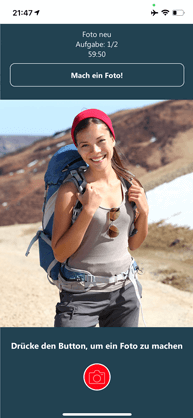
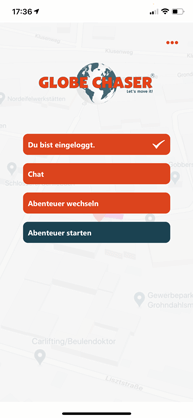
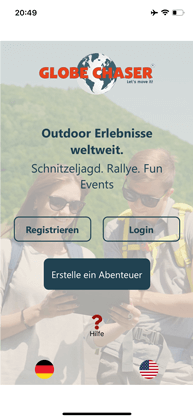
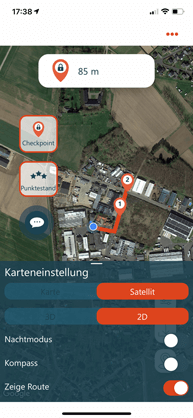
Nowadays, we plan most scavenger hunt team events using our in-house app. This has the advantage that we can create challenges across a wide range of topics. This makes the treasure hunt more interactive and, not least, more exciting. Nevertheless, we also include hands-on and physical puzzles on most routes. These could be, for example, escape challenges where you have to open boxes with your team, assemble circuits and decipher scrolls. This means that analogue scavenger hunt
almost always meets digital treasure hunt.
Every now and then, we also distribute clues on lampposts, hide QR codes and more. Analogue scavenger hunts catapult participants back to their childhood. They have the advantage that teams are left to their own devices and can get away from today’s digital media for a while. This also minimises distractions. The planning effort is greater here, and the route is usually a little shorter. The ideal length of a treasure hunt for adults
Most scavenger hunt events or
treasure hunts last around 2,5 – 4 hours and include at least one snack break. We then serve participants cold drinks (hot drinks in winter too) and small snacks to replenish their energy. We usually use spots with a beautiful view or peaceful surroundings. The route length depends on the elevation gain covered. With the scavenger hunt app
Globe Chaser, for example, the route length and elevation gain can be determined in just a few clicks during planning. Have you, for example, older people on your team or participants with physical limitations, you should be sparing with the elevation gain. Ideally, there should be around 50 – 100 metres of elevation gain over a walking distance of around 6 kilometres. But, as already mentioned, this varies greatly. The weather also plays a role in determining the route length for a treasure hunt for adults.
Online tip: Virtual treasure hunt
We live in unusual times, so the subject of treasure hunts or scavenger hunts has also found its way to virtual team events
found. A virtual scavenger hunt
is more like a geography Online Quiz Game
, which is why we opted for the semi-virtual scavenger hunt option. Participants keep their distance from one another and can also choose to be in different cities at different locations. The teams or individual participants solve various scavenger hunt tasks
at their location, but actually move around the city or through nature as they do so. That is also possible with our in-house app for scavenger hunt events
. The advantage is that you can start a treasure hunt at different company locations at the same time, for example: the tasks are the same, the procedures identical, and in the end, points versus time taken determine victory or defeat.